
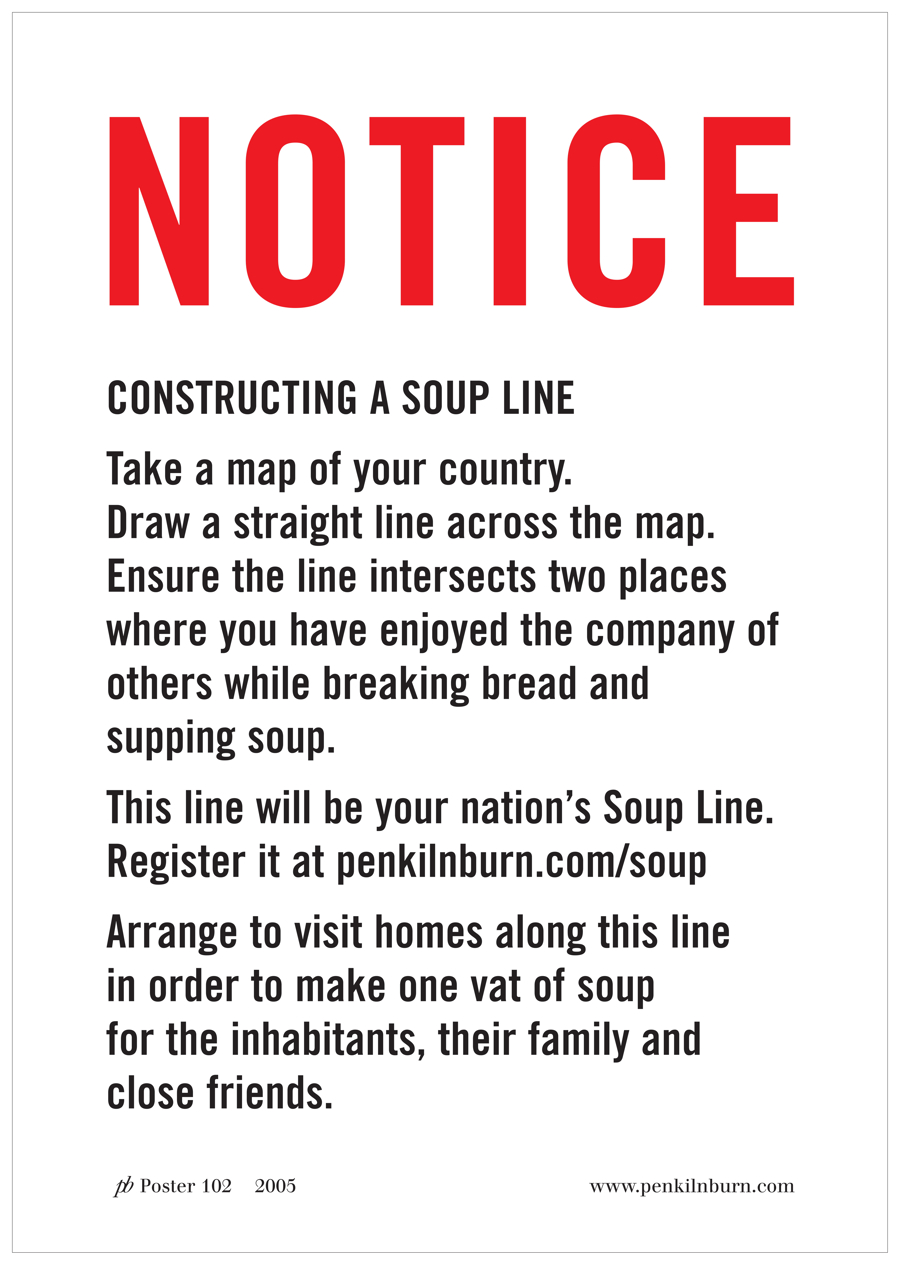
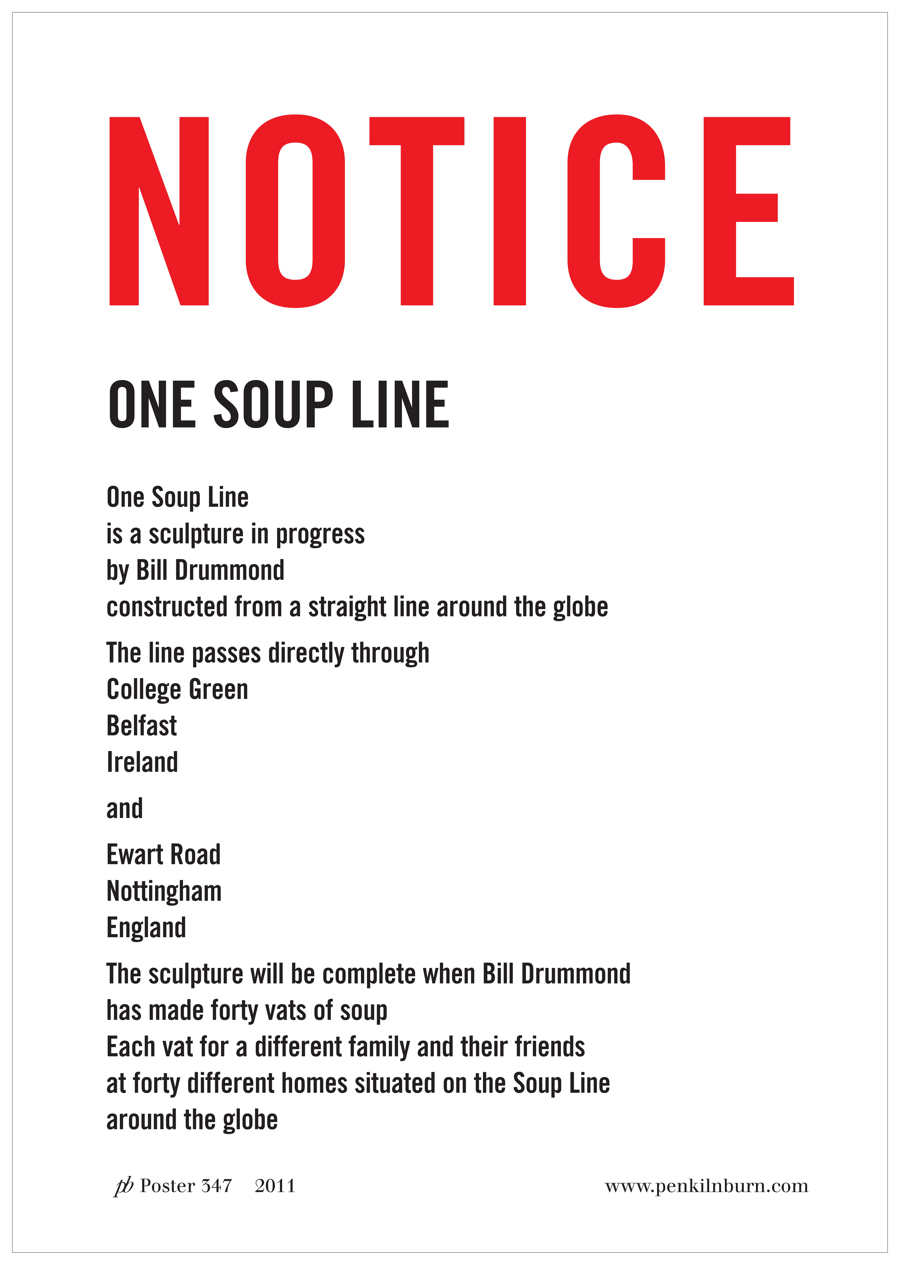
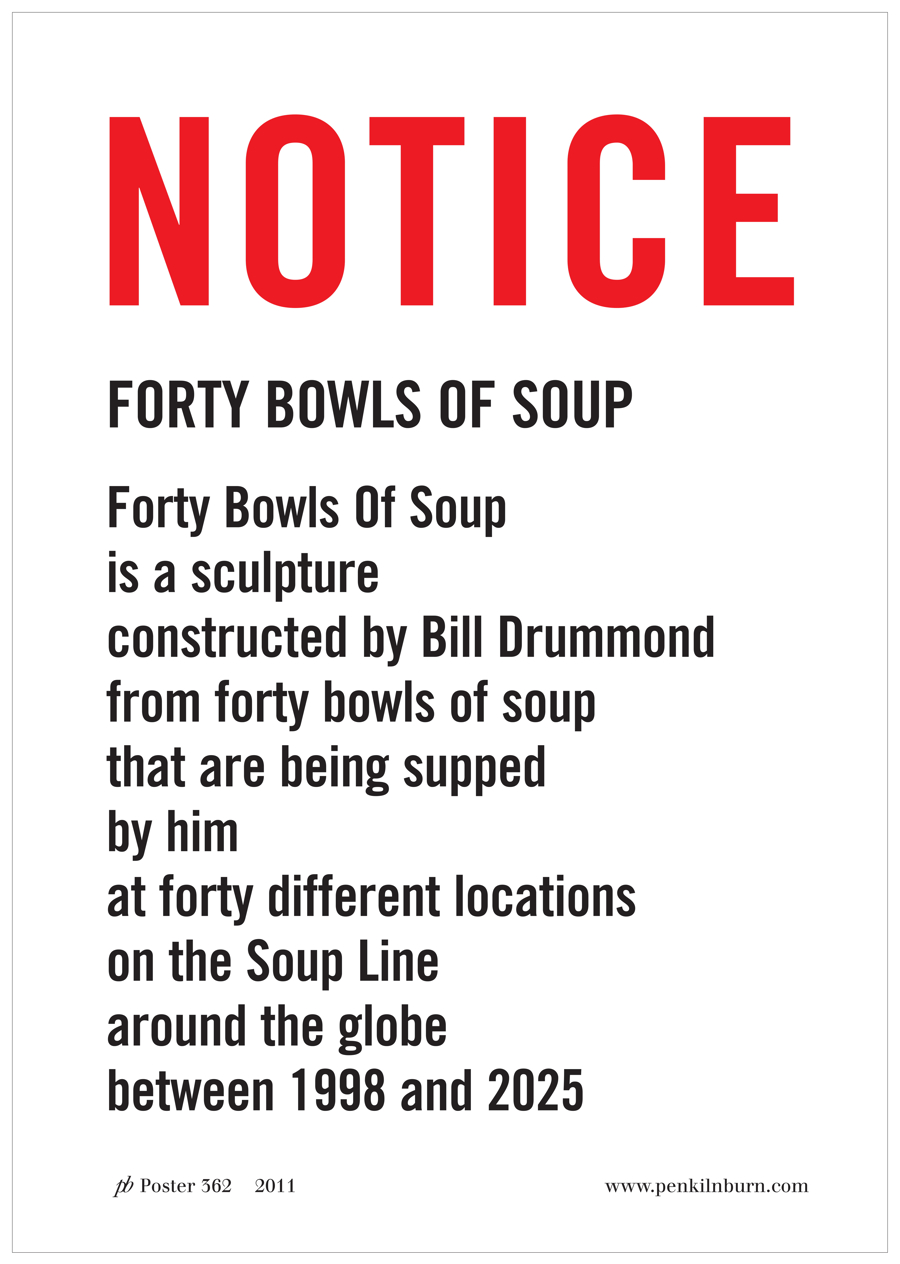
The Soup Line was a participatory art project initiated by Bill Drummond in the late 1990s and formalised in the early 2000s. The project consisted of Drummond drawing a straight line across a map of the British Isles and offering to cook soup for individuals whose homes or venues lie directly upon that line.
The work forms part of Drummond’s broader Penkiln Burn series of actions, many of which emphasise small-scale human interaction, everyday tasks, and conceptual frameworks derived from simple rules.
Origins and Development
The concept of The Soup Line emerged after Drummond cooked soup for small gatherings in domestic settings, first in Belfast in May 1998 and later in Nottingham in January 2003. These early events established the basic format: Drummond would prepare and serve soup to groups of people in ordinary, non-institutional environments, focusing on the shared experience rather than the culinary or performative aspects. The original Belfast cooking session was later documented in Penkiln Burn Pamphlet No. 5 (Making Soup) which would also be featured in Drummond’s book 45 later.
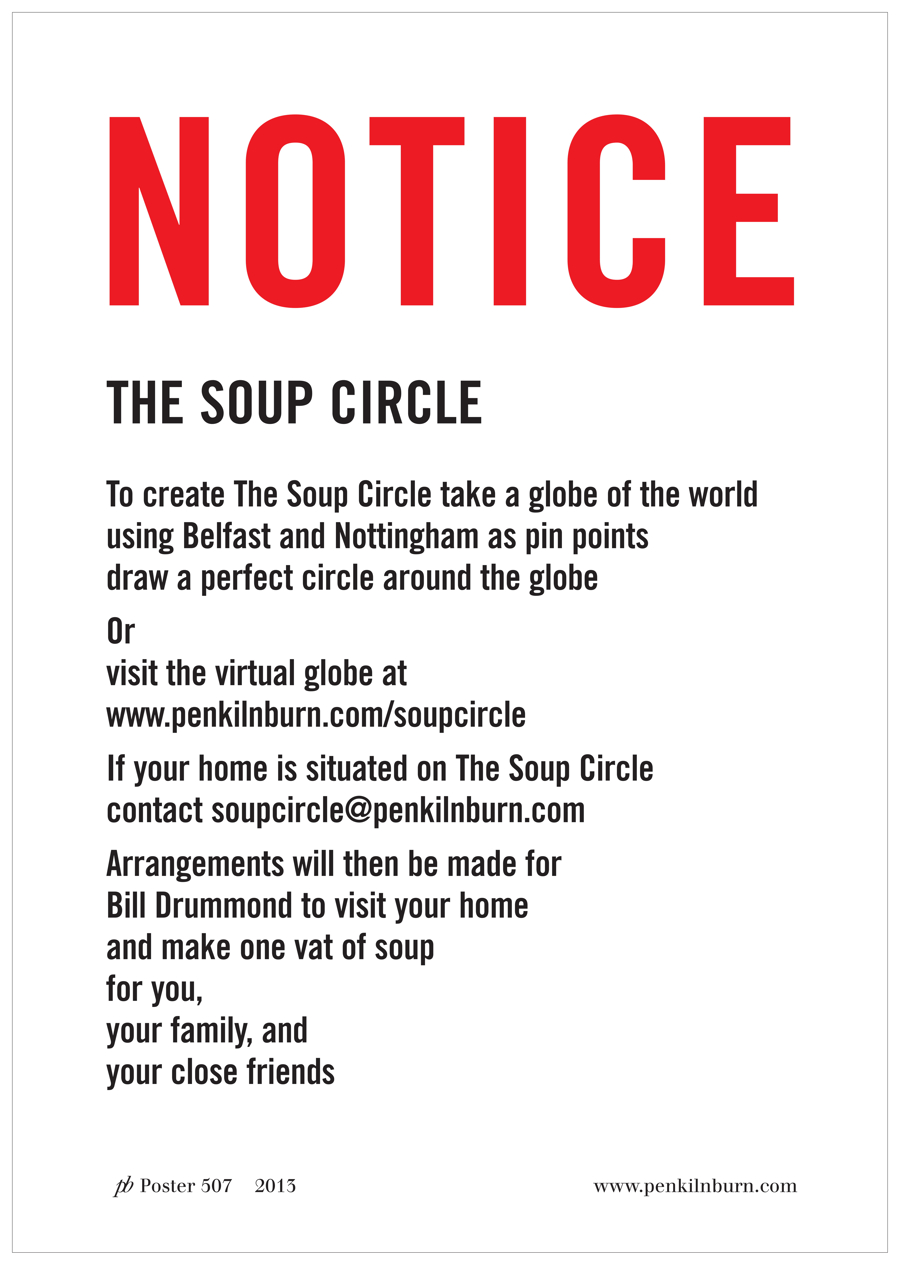
The project was publicly articulated during the 2004 Cathedral Quarter Arts Festival in Belfast, when Drummond made himself available to visit locations along the predetermined line. Eligibility to participate was restricted to dwellings situated precisely on this line, a requirement he communicated through flyers and public notices.
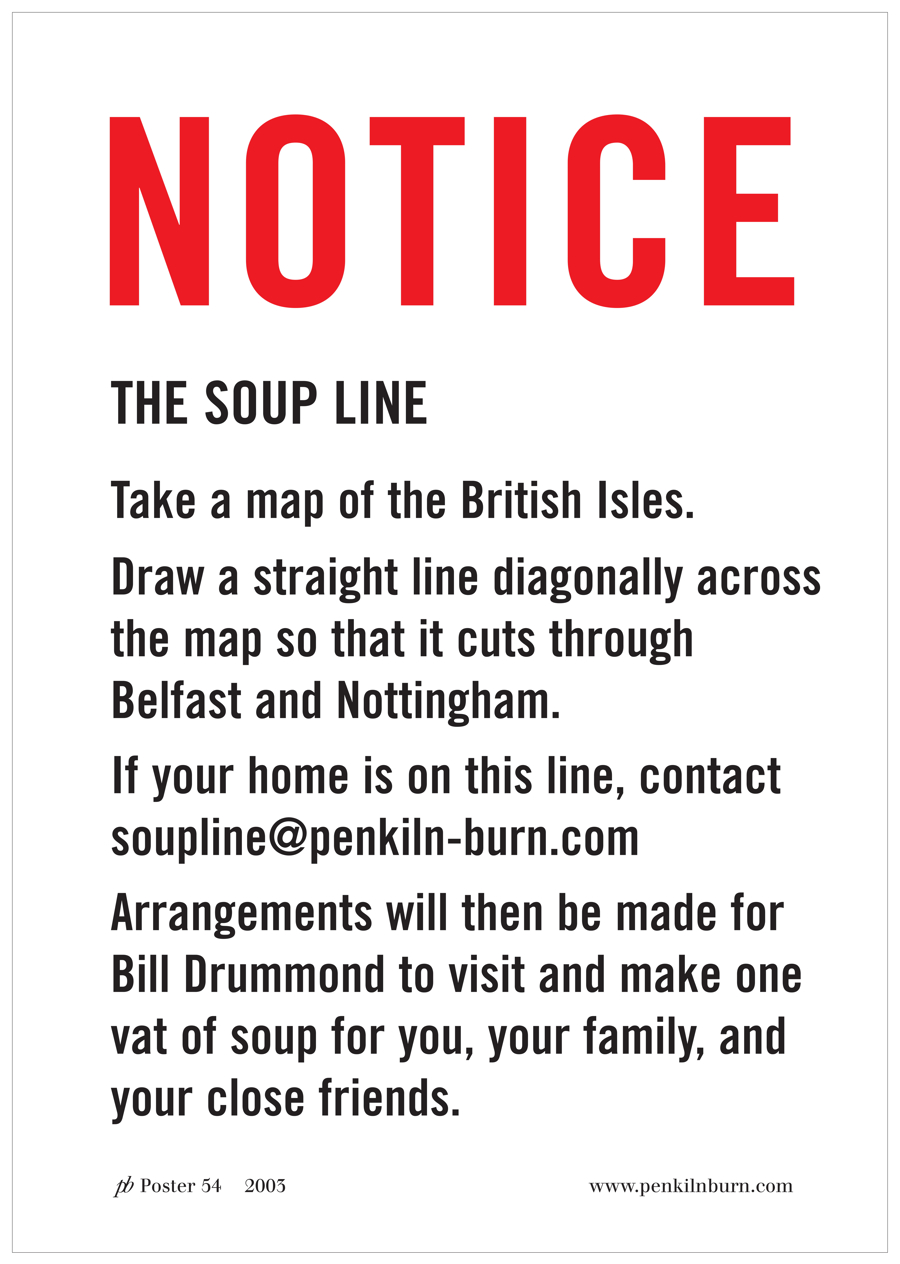
Take a map of the British Isles
Draw a straight line diagonally across the map so that it cuts through Belfast and Nottingham.
If your home is on this line, contact soupline (at) penkiln-burn.com
Arrangements will then be made for Bill Drummond to visit and make one vat of soup for you, your family, and your close friends.
This constraint formed a central conceptual component of the project, transforming a cartographic mark into an organising principle for social encounters.

Concept and Themes
The Soup Line reflects Drummond’s continued interest in relational, process-based art and his shift away from large-scale or confrontational gestures toward small, direct engagements between artist and participants. The work emphasises minimalism and domesticity, employing everyday activities—such as chopping vegetables or stirring a pot—as artistic actions. Drummond has described these gestures as creatively fulfilling, noting that the project’s value lies in its interpersonal interactions rather than in spectacle or scale.
Although framed in simple terms, The Soup Line engages with themes of geography, community, and the role of art in ordinary life. The line drawn across the map acts as both a literal reference point and a conceptual filter, determining who may participate and transforming abstract cartographic space into a lived route of encounters. Drummond has also compared the act of communal soup-making to historical traditions of shared meals within religious or civic communities.
Relation to Later Work
Elements of The Soup Line recur in Drummond’s later activities associated with the Penkiln Burn and The 25 Paintings world tour (2014–2025). During this period he continued to employ everyday tasks—such as baking cakes, shining shoes, and giving away flowers—as structured artistic actions. These later works maintain the focus on direct personal interaction and on art as an exchange rather than a commodity, reinforcing themes first articulated through The Soup Line.
Reception and Significance
Critical responses to the project have highlighted its unpretentious nature and emphasis on human warmth. The Soup Line was noted for its resistance to commodification, its reliance on participation, and its use of ordinary activities to challenge conventional expectations of what constitutes an artwork. It was frequently cited as an example of Drummond’s broader turn toward socially engaged, small-scale artistic practices in the years following his earlier, more widely publicised projects.




Recent Comments